
Most clinical hiring plans track time to fill. Very few track the number that actually matters, which is time from accepted offer to first billable visit. Those two can be four months apart.


The U.S. healthcare system is facing a staffing crisis of unprecedented scale. A recent report from McKinsey & Company predicts a shortage of 200,000 to 450,000 registered nurses (RNs) by 2025, while the demand for advanced practice registered nurses (APRNs) is expected to surge by 40% in the same period. The Bureau of Labor Statistics paints an equally bleak picture for medical technicians, forecasting a 5% decline in the workforce by 2031. This translates to a potential loss of over 29,000 technicians in the coming years.

One reason the world still holds on to hope for a robust COVID-19 recovery is the pivotal role our healthcare workers play in dealing with the crisis. Despite the enormous disruption to society, our present crisis demonstrates the need for clinical workforces to be construed as a key investment towards health outcomes, instead of a cost to deliver care.
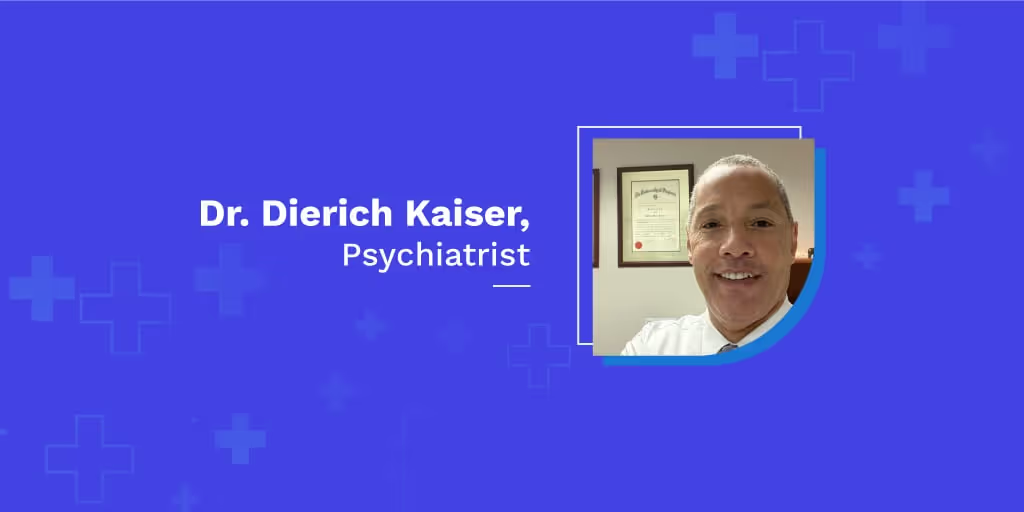
In the dynamic and demanding atmosphere of a hospital, establishing a culture of respect and fostering workplace values is of paramount importance. DirectShifts had the privilege of speaking with Dr. Derek Kaiser, an experienced psychiatrist with over 25 years in diverse healthcare settings.

A Modern Approach to Clinician Float Pools can Address Rising Labor Costs and Promote Patient Safety. Surging healthcare labor costs are the primary cause for spending growth in hospital patient care. In their annual Cost of Caring report, the American Hospital Association notes, "Hospitals' labor expenses... are up 20.8% from 2019 to 2022....

Workforce management is top of mind for healthcare executives as COVID-19, historical inflation, and critical health worker shortages have pushed hospitals and health systems to their operational and financial brink. With total healthcare labor expenses jumping 20.8% from 2019 to 2022 and "...median operating margins for hospitals fell from 5.6% to -1.4% between December 2021 and March 2022", health system executives are looking for innovative ways to curb labor costs.

Healthcare worker burnout has become an increasingly significant issue throughout the healthcare industry. Burnout among healthcare workers affects patient care and can cause decreased job satisfaction and performance, leading to high clinician turnover, exacerbating staffing shortages, and threatening staff and patient safety. Healthcare administrators continuously seek innovative solutions to this challenge.

Subscribe for industry insights, recruitment trends, and tailored solutions for your organization.


.png)


